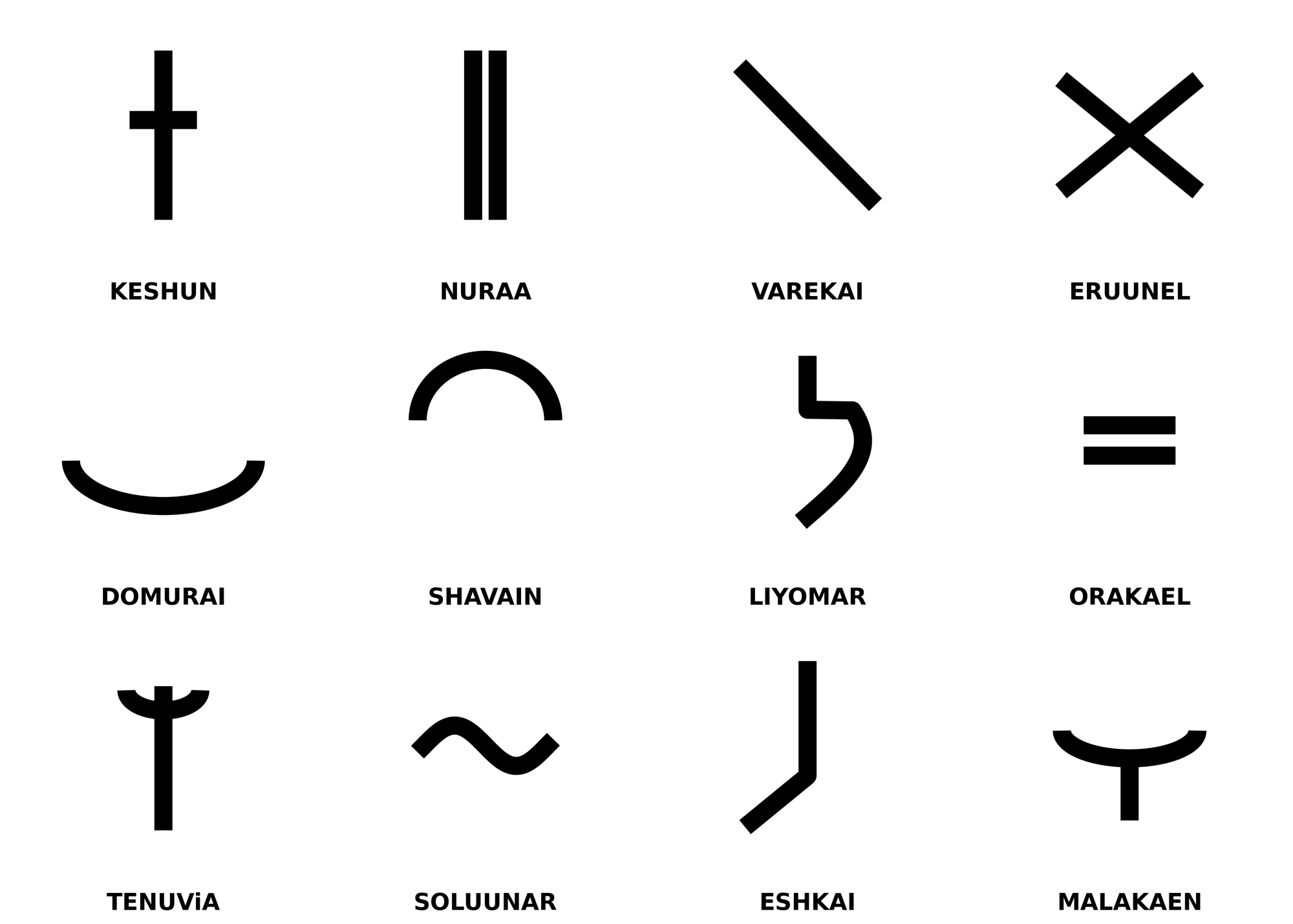
Resonance Glyphs Full
The Resonance Glyphs presented here form the complete field introduced on the public page.
They are shown in their natural sequence and grouped by octave for coherence, not instruction.
Each set of twelve establishes a local harmonic within the larger field. Descriptive passages are provided to clarify function and recognition, not to prescribe use.
First Octave (1–12)
Foundation · Orientation · Primordial Movement
This octave establishes the foundational resonant conditions from which the field unfolds.
It governs emergence, continuity, inward turning, divergence, grounding, and the first acts of containment and protection.
The glyphs here orient perception and stabilise the initial relationship between awareness, motion, and structure. They are encountered early not because they are simpler, but because they are structurally prior.
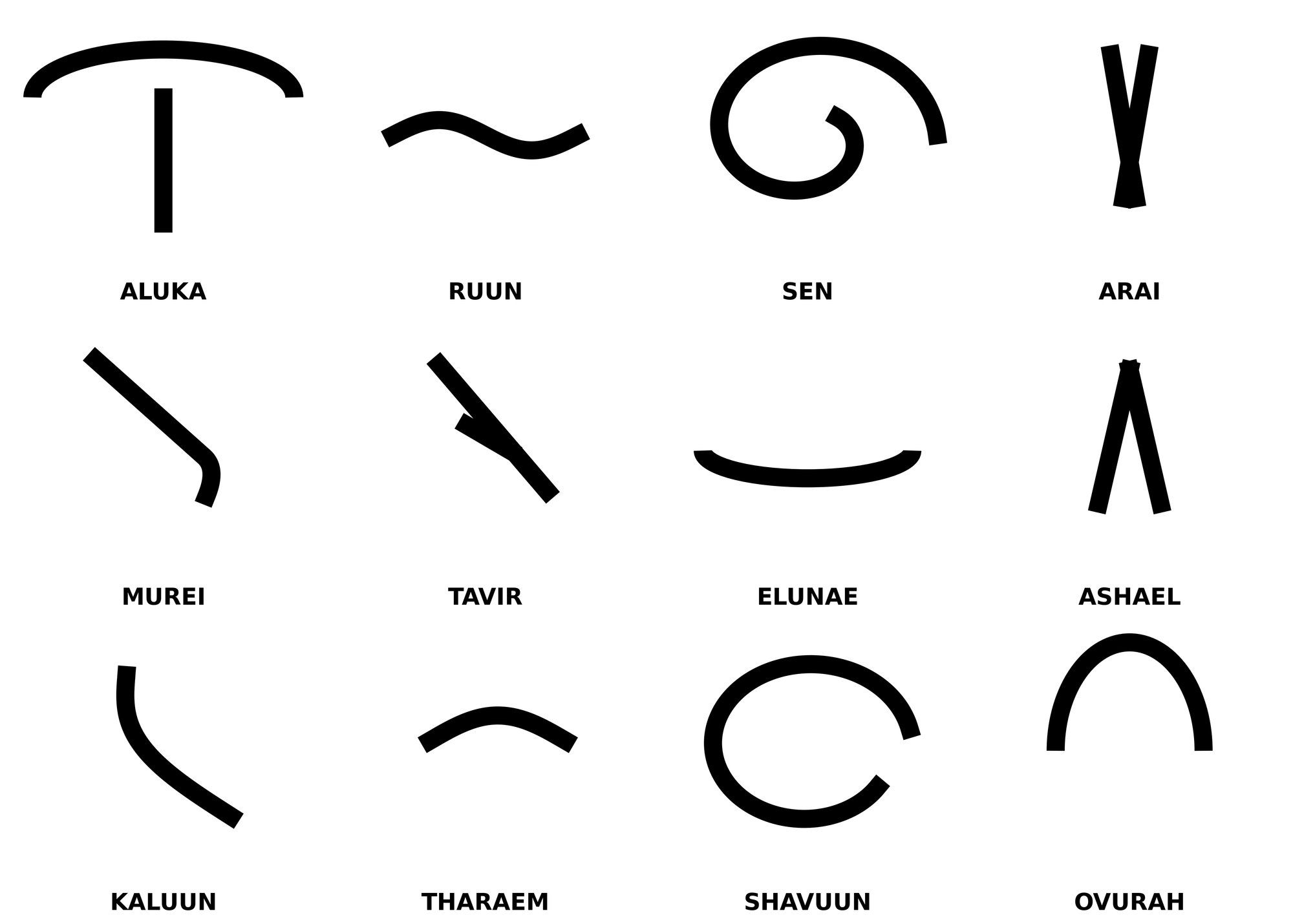
First Octave — Descriptive Passages
ALUKA
Opening lift; the initial rise of directed awareness from inertness into orientation.
RUUN
Continuity; motion sustained without disruption, allowing flow to carry forward.
SEN
Inward turn; attention drawn toward centre, condensing awareness and sensitivity.
ARAI
Divergence; lawful branching into parallel paths without conflict.
MUREI
Grounded descent; ascending motion embedded into structure and form.
TAVIR
Crossing-through; decisive penetration of obstruction to restore alignment.
ELUNAE
Receptive holding; containment that allows processes to unfold without collapse.
ASHAEL
Ascending refinement; elevation through clarification and disciplined ascent.
KALUUN
Inward collapse; contraction that precedes renewal and reformation.
THARAEM
Trajectory bend; subtle redirection of outcome without rupture.
SHAVUUN
Held ascent; rising force paused in a chamber of potential.
OVURAH
Protective arch; sheltering boundary that holds without enclosing.
Second Octave (Glyphs 13–24)
Stabilisation · Containment · Structural Memory
This octave governs the consolidation of resonance once initial motion has been established.
It introduces stability, containment, structural memory, and the conditions required for coherence to persist across layers and time.
Where the First Octave initiates movement, the Second holds and shapes it, ensuring continuity without collapse or drift.